
Zero miscounts
Vision-based counting eliminates the shortfalls and overages that manual tally and weight-based estimates let through.
Whether parts are dropping through a chute, moving along a belt, or already sitting in a tray or stack, vision-based counting catches the shortfalls and overages that manual tally and weight-based estimates miss — at full accuracy.
A missed capsule in a bottle, a short stack of rings before assembly, an SKU count that doesn't match the dispatch manifest — these are quiet, expensive errors. Manual counting is slow and fatigues; weight-based estimation breaks down the moment part weight varies. Vision counts the actual units, every time, and logs the result.
Parts dropping through a chute, spout, or funnel — capsules, tablets, fasteners, kernels — counted as they fall, at high speed.
ExploreParts moving continuously along a belt or line — bottles, pipes, packaged goods — counted in motion, encoder-synced to line speed.
ExploreParts already arranged and stationary — a stack of rings, a tray of vials, a pallet face — counted in a single capture.
ExploreVision-based counting eliminates the shortfalls and overages that manual tally and weight-based estimates let through.
Counts every unit inline — no sampling, no slowing the line down to check a batch.
Flags or diverts any pack, stack, or batch that doesn’t match the required count before it moves downstream.
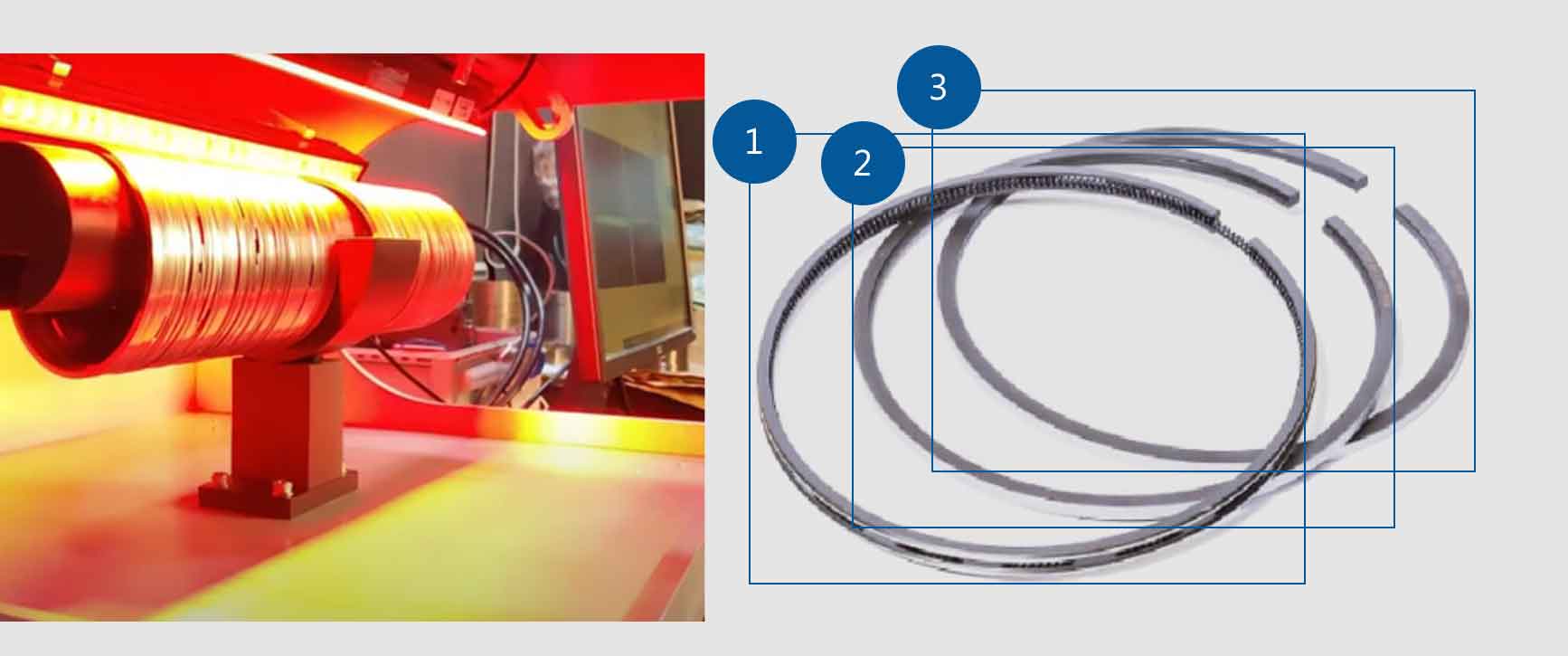 AUTOMOTIVE INDUSTRIESCASE STUDY
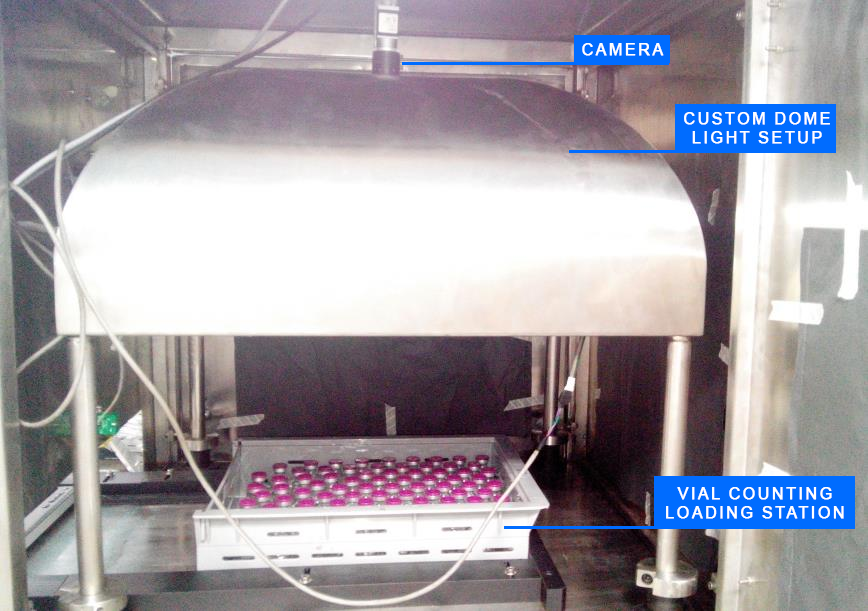 PHARMACASE STUDY
 LOGISTICS AND PACKINGCASE STUDY
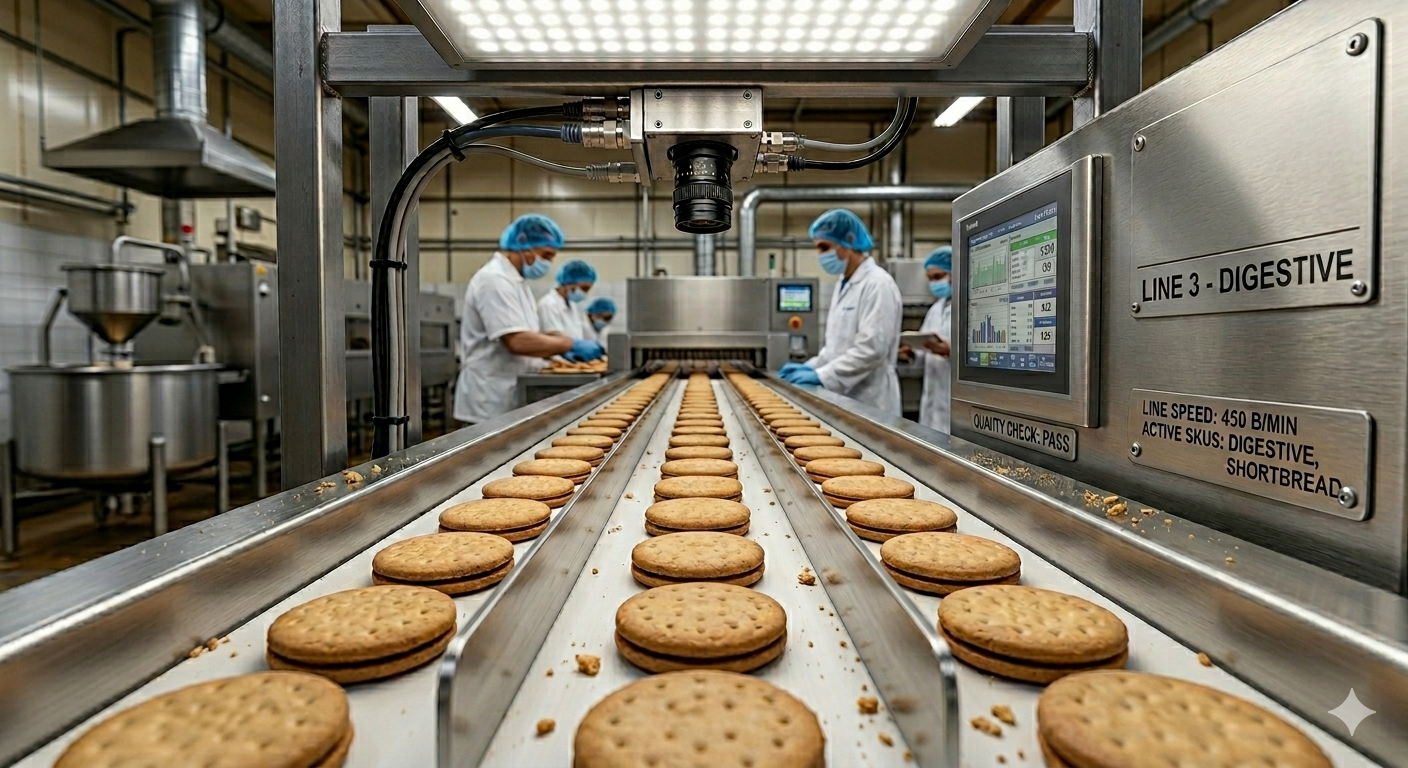 FMCGAPP NOTE
A single camera above the post-oven conveyor replaces per-lane photoelectric sensors, using instance segmentation to count biscuits, flag broken or deformed pieces, and track lane balance across 2–3 lanes — addressing the specific failure mode that causes beam sensors to undercount once biscuits touch or shingle.
 FMCGAPP NOTE
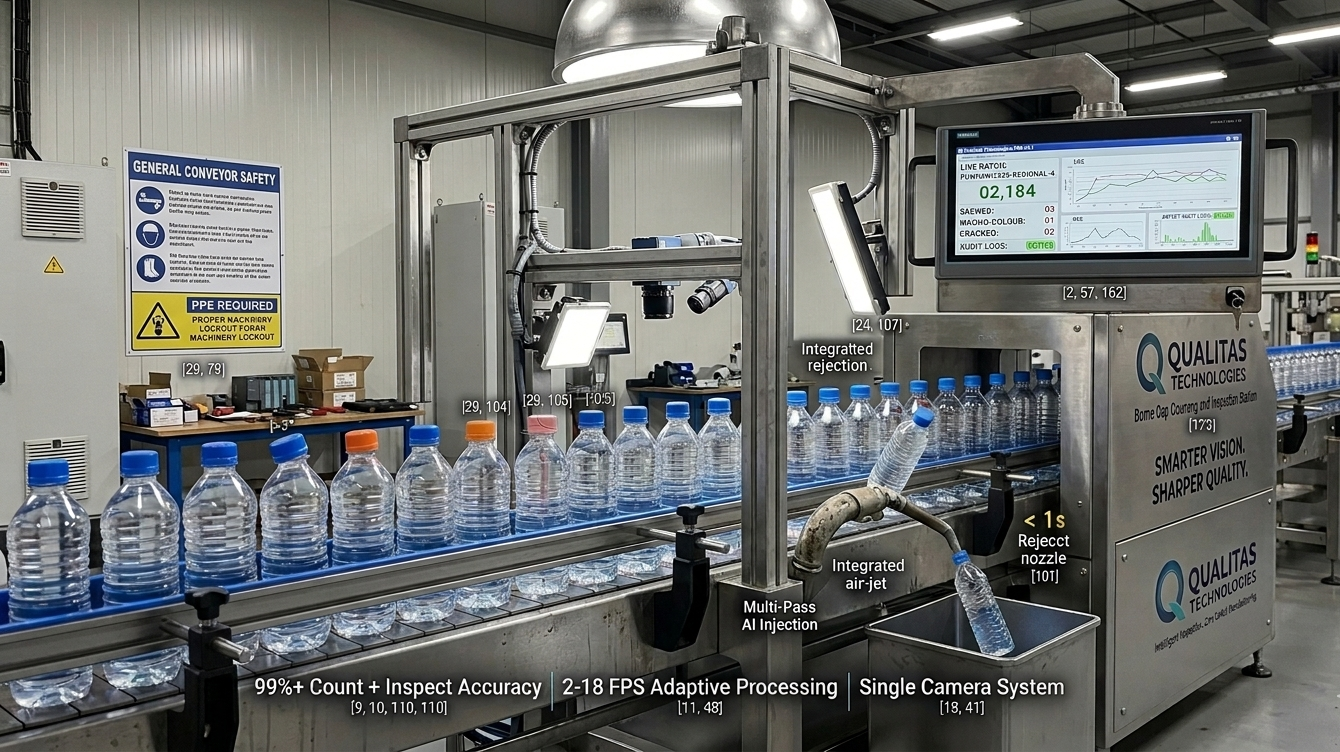
A single overhead AI camera counts bottles and screens caps for missing, skewed, wrong-colour, and cracked defects in one inference pass — building the kind of timestamped, batch-linked image record that FSSAI's revised packaged-water testing regime is moving toward, instead of relying on a torque sensor and a fatigued spot-check.
 INDUSTRYAPP NOTE
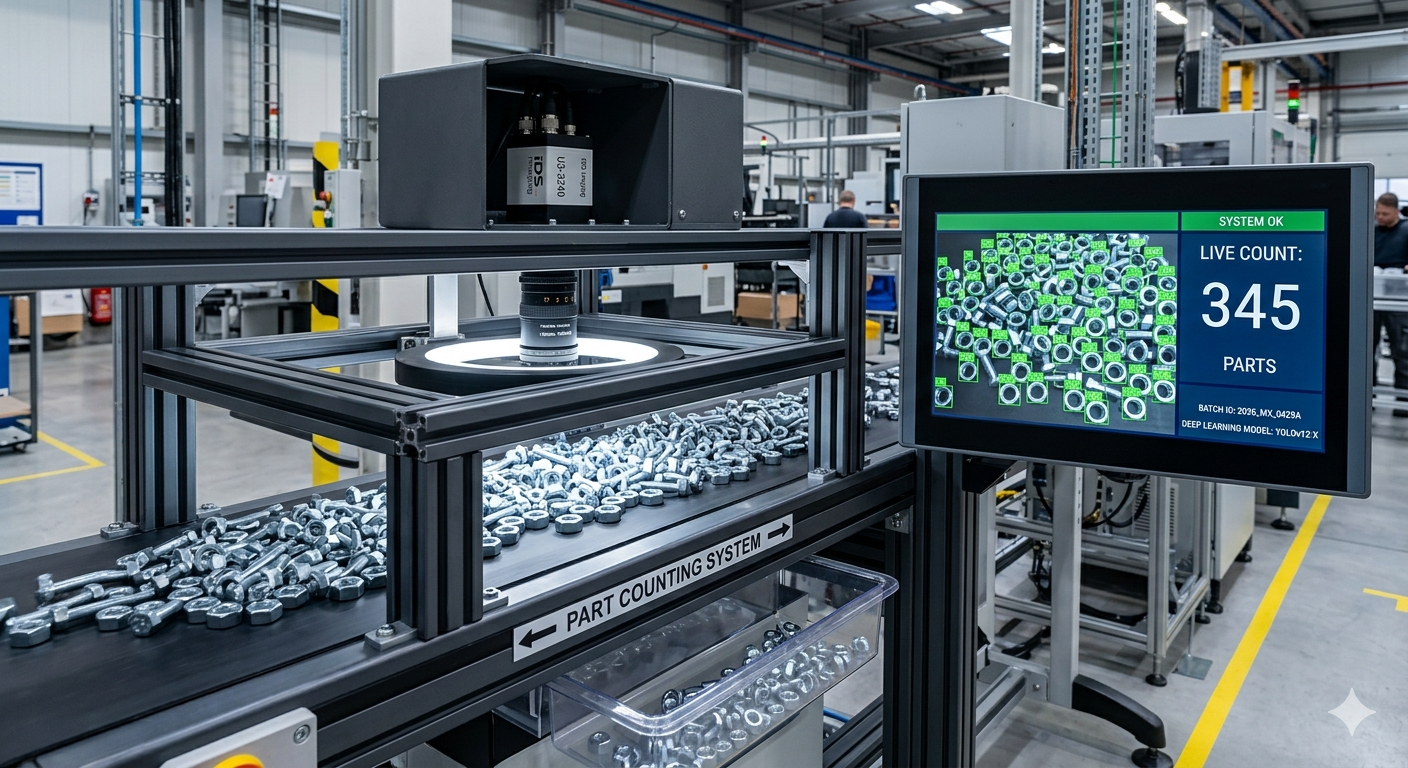
An instance-segmentation machine vision architecture for counting mixed-SKU electronics and interconnect parts — from sub-5 mm micro-pins to 200 mm cable assemblies — in a single top-down image, built to remove the fatigue-driven error floor that published human-factors research documents in manual counting.
 FMCGAPP NOTE
Vision-based count verification and SKU traceability for cigarette buds — replacing an assumed tray-fill count with a measured, image-backed, and audit-ready result at every tray, built around the count-tolerance and cycle-time targets a pilot actually validates rather than a number quoted off a spec sheet.
AUTOMOTIVE INDUSTRIESCASE STUDYPHARMACASE STUDYLOGISTICS AND PACKINGCASE STUDYFMCGAPP NOTEA single camera above the post-oven conveyor replaces per-lane photoelectric sensors, using instance segmentation to count biscuits, flag broken or deformed pieces, and track lane balance across 2–3 lanes — addressing the specific failure mode that causes beam sensors to undercount once biscuits touch or shingle.
FMCGAPP NOTEA single overhead AI camera counts bottles and screens caps for missing, skewed, wrong-colour, and cracked defects in one inference pass — building the kind of timestamped, batch-linked image record that FSSAI's revised packaged-water testing regime is moving toward, instead of relying on a torque sensor and a fatigued spot-check.
INDUSTRYAPP NOTEAn instance-segmentation machine vision architecture for counting mixed-SKU electronics and interconnect parts — from sub-5 mm micro-pins to 200 mm cable assemblies — in a single top-down image, built to remove the fatigue-driven error floor that published human-factors research documents in manual counting.
FMCGAPP NOTEVision-based count verification and SKU traceability for cigarette buds — replacing an assumed tray-fill count with a measured, image-backed, and audit-ready result at every tray, built around the count-tolerance and cycle-time targets a pilot actually validates rather than a number quoted off a spec sheet.
Tell us how your parts move — free-fall, belt, or something else — and we'll scope the right approach.