
Encoder-synced tracking
Locks to line speed via encoder feedback, tracking every part across the frame without double-counting or drops.
For parts that stay in continuous motion along a belt or line — bottles, pipes, cartons, packaged goods — vision counts every unit as it passes, encoder-synced to the exact speed of your line, with no need to stop or stage anything.

When parts never stop moving, a miscount usually means a physical stop-and-recheck — or worse, it ships anyway. Beam counters lose track when units bunch up; manual tally can't keep pace with line speed at all.
A camera tracks parts as they pass, encoder-synced so nothing is double-counted or skipped even at full speed, verifying the running count against the target and rejecting or flagging anything that falls short — with a full log per run.
Locks to line speed via encoder feedback, tracking every part across the frame without double-counting or drops.
Counts and identifies mixed SKUs moving side by side — verifying the mix, not just the total.
Diverts any pack or unit that doesn’t match the required count before it leaves the station.
 FMCGAPP NOTE
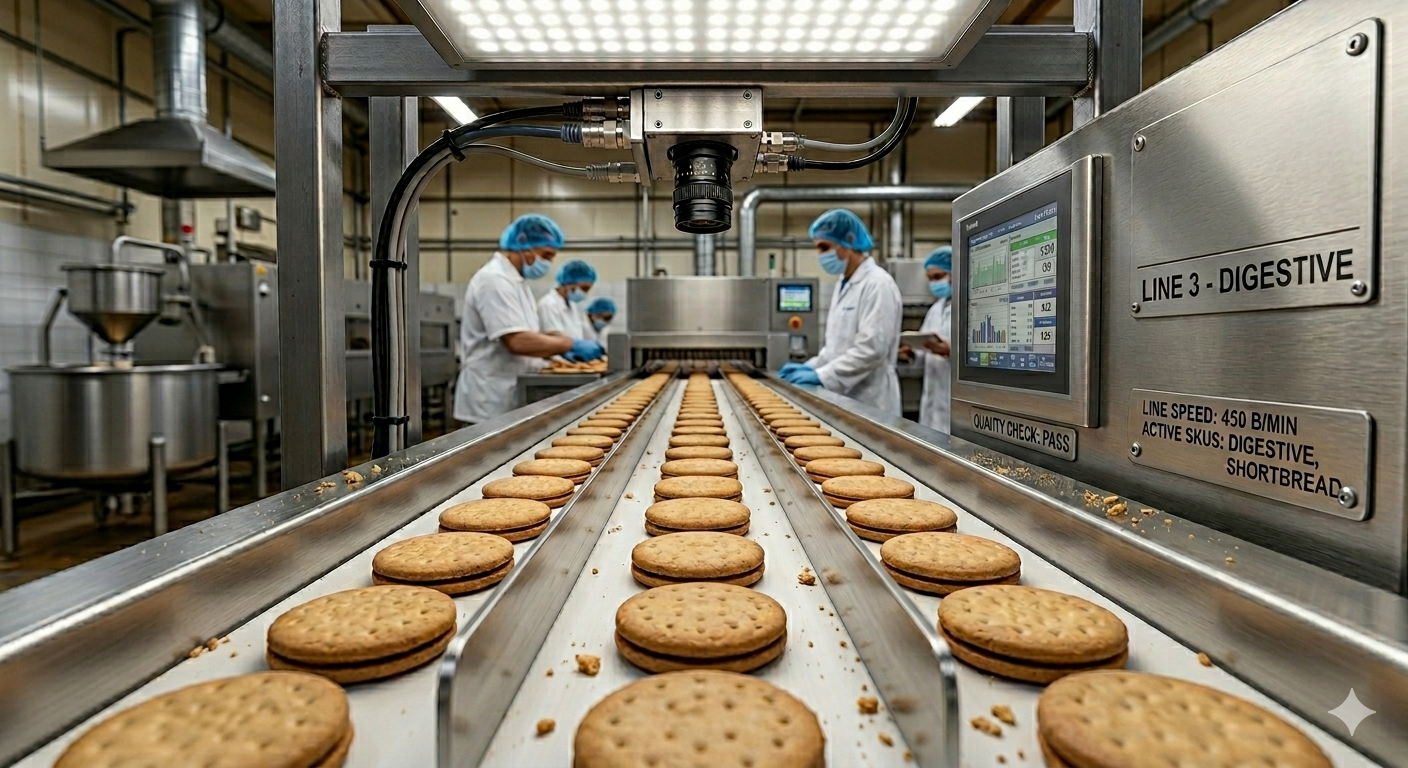
A single camera above the post-oven conveyor replaces per-lane photoelectric sensors, using instance segmentation to count biscuits, flag broken or deformed pieces, and track lane balance across 2–3 lanes — addressing the specific failure mode that causes beam sensors to undercount once biscuits touch or shingle.
 FMCGAPP NOTE
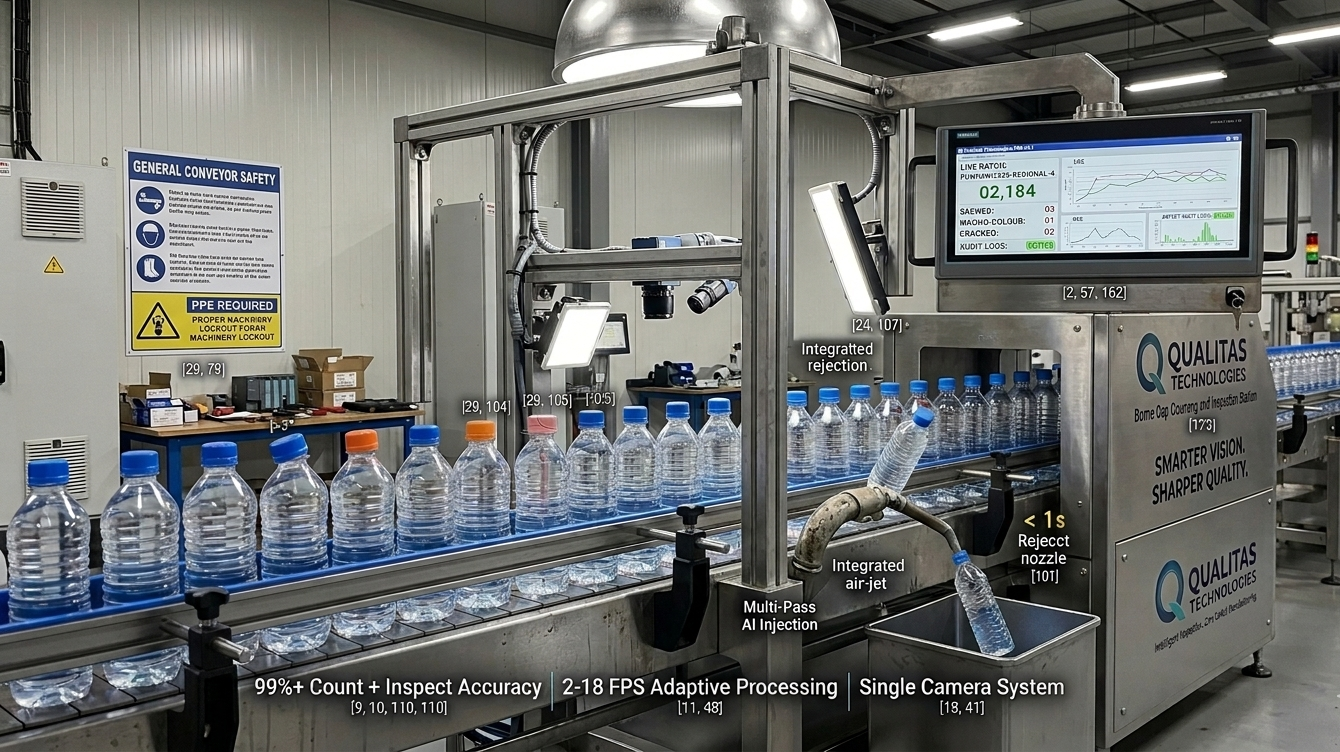
A single overhead AI camera counts bottles and screens caps for missing, skewed, wrong-colour, and cracked defects in one inference pass — building the kind of timestamped, batch-linked image record that FSSAI's revised packaged-water testing regime is moving toward, instead of relying on a torque sensor and a fatigued spot-check.
 FMCGAPP NOTE
Vision-based count verification and SKU traceability for cigarette buds — replacing an assumed tray-fill count with a measured, image-backed, and audit-ready result at every tray, built around the count-tolerance and cycle-time targets a pilot actually validates rather than a number quoted off a spec sheet.
Tell us your part, line speed, and required count — we'll scope the right approach.