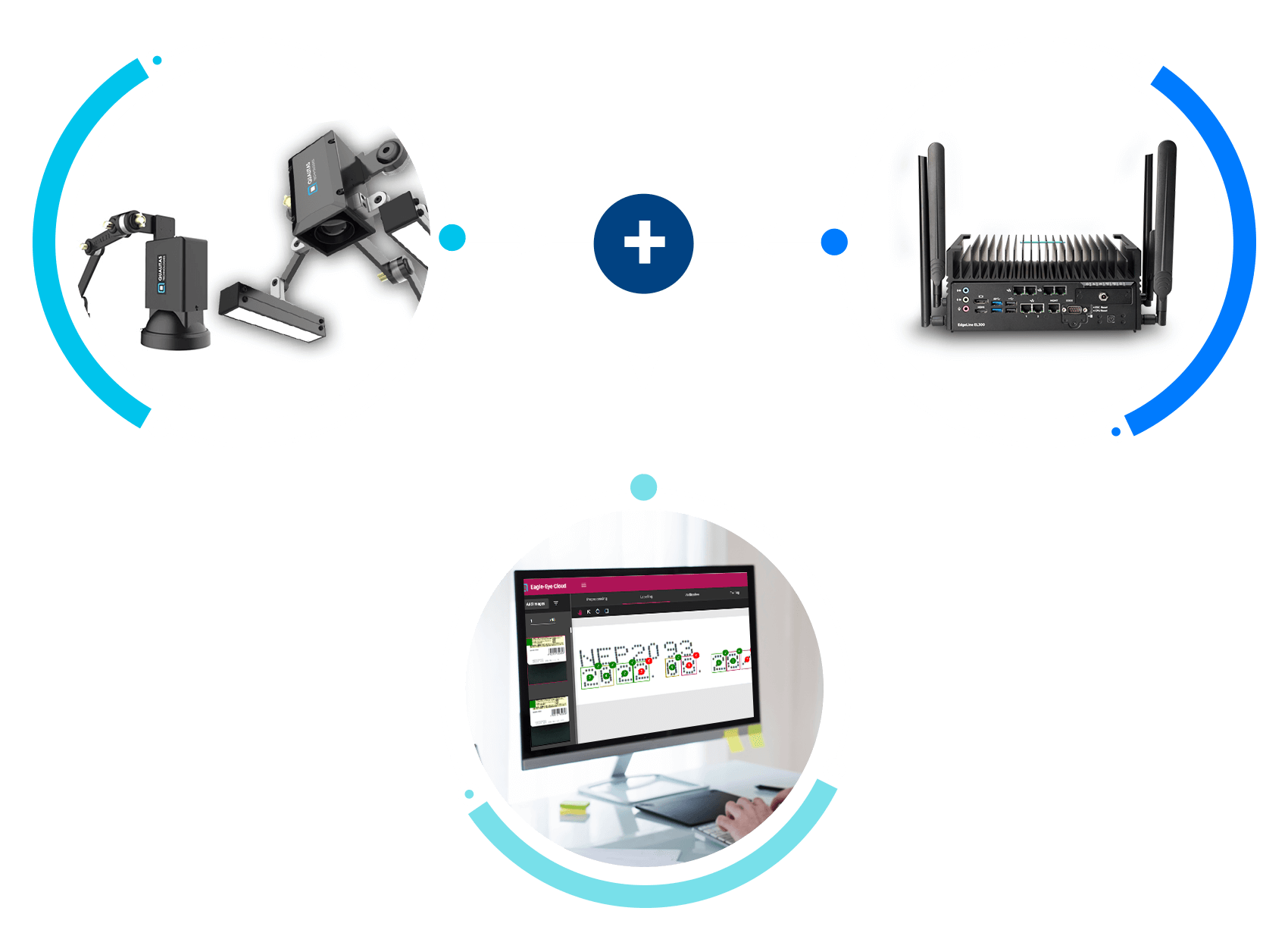
Most machine vision failures aren’t caused by a bad camera or a weak model — they come from treating image acquisition, AI inferencing, and deployment management as three separate problems solved by three different vendors. The Qualitas EagleEye® Inspection System exists to close that gap: a modular hardware and software stack that covers the full path from camera to production-floor decision, built to be reconfigured across applications rather than rebuilt for each one.
The Three Modules
EagleEye® is built as three connected modules, each replaceable and scalable on its own:
| Module | What it does |
|---|---|
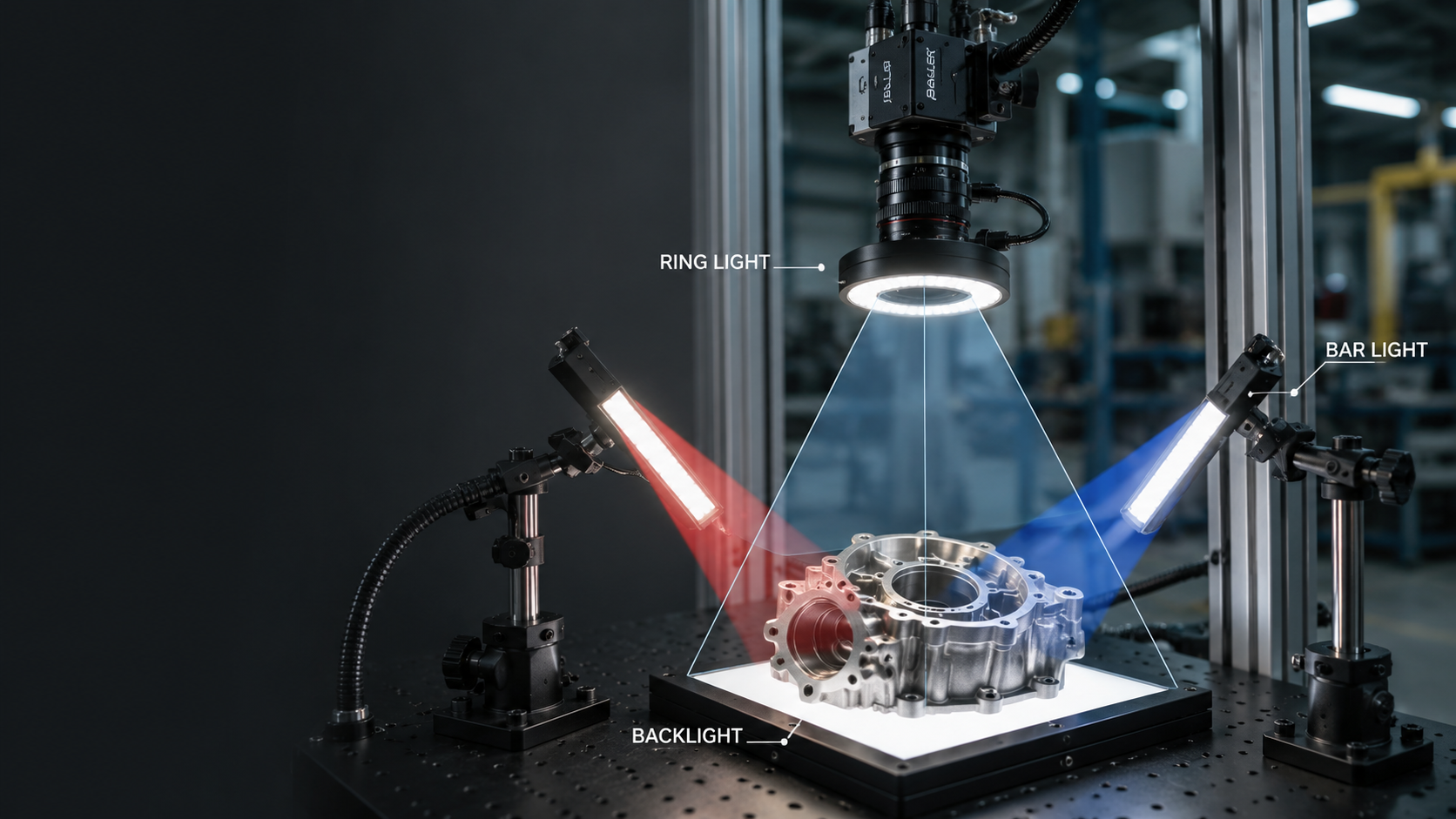
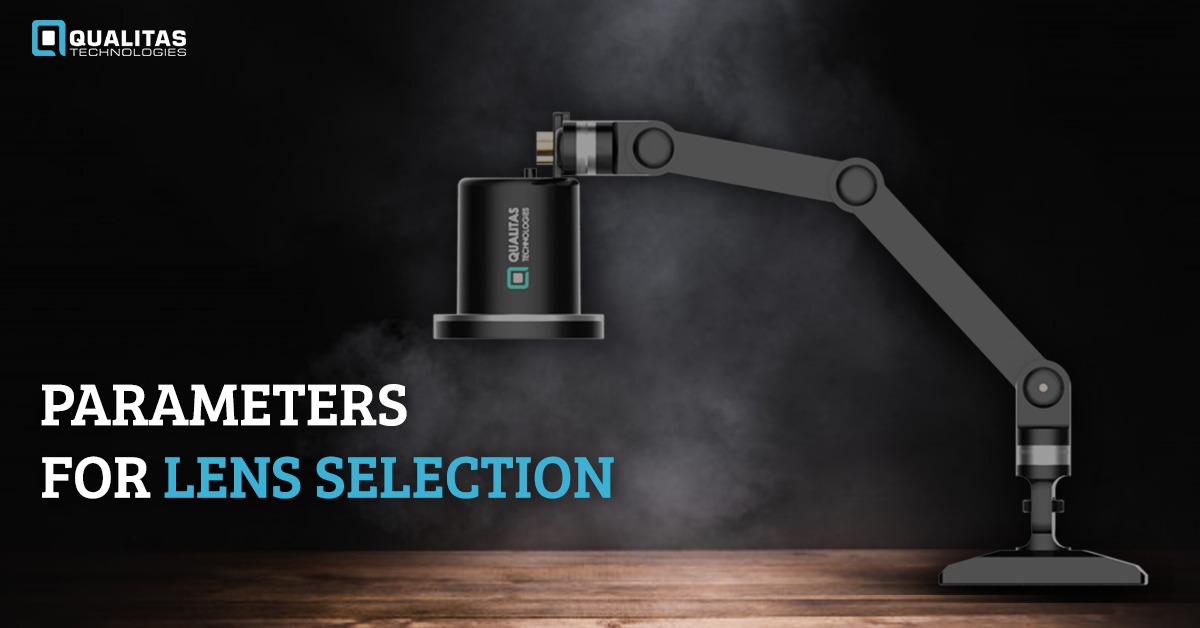
| Hardware — Image Acquisition | A camera, lens, and lighting module with a flexible mounting arm. Resolution, optics, and illumination (spotlight, dome, ring, or bar light) are chosen per application rather than fixed to one configuration. |
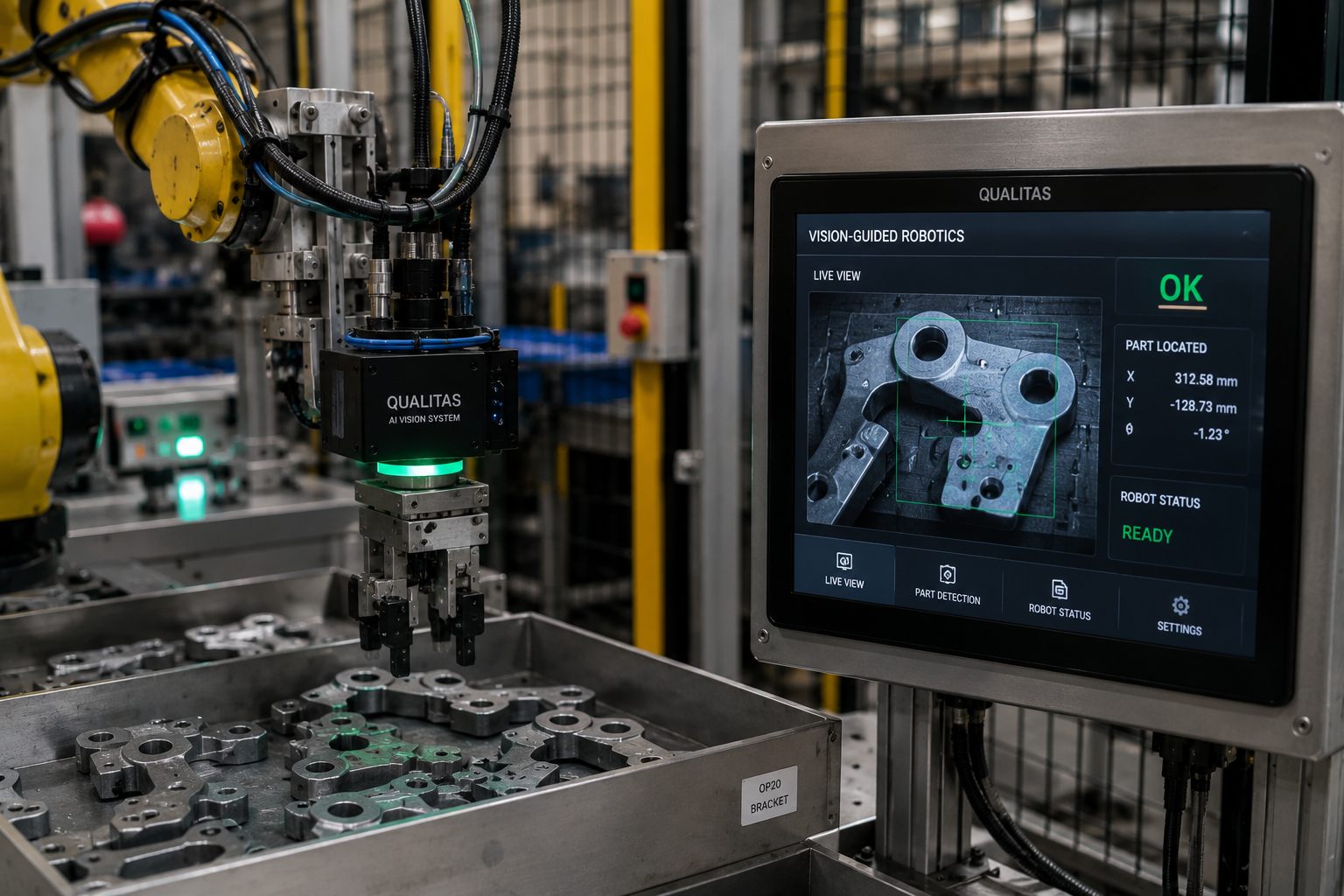
| Edge — AI Processing | An AI-accelerated vision controller that runs Qualitas’ deep learning inferencing models on-device, so pass/fail decisions happen at the line without a round trip to the cloud. |
| Cloud — Training & Monitoring App | A web application for image capture, annotation, deep learning model training, deployment management, and accuracy tracking across every installed unit. |
From Camera to Production Decision
A deployment moves through four stages:
- Image Acquisition — a plug-and-play camera setup captures a consistent, well-lit image of the part.
- Data Preparation — sample images are collected and labeled through the Cloud app’s point-and-click annotation interface.
- DL Training — the labeled dataset trains a deep learning model using cloud infrastructure, with architecture chosen for the defect or feature being inspected.
- Deployment & Optimization — the trained model is pushed to the Edge unit “over the air,” then monitored and fine-tuned as real production data comes in.
That last step matters more than it sounds: accuracy on the first trained model is rarely the ceiling. EagleEye®’s closed-loop retraining lets a system improve after deployment as it sees more real parts, rather than staying frozen at whatever the initial training set could achieve.
What This Looks Like Day to Day
- Complete traceability — every inspection is logged with its image, so a quality dispute can be resolved by pulling the actual frame instead of relying on operator memory.
- A single web dashboard shows accuracy and throughput across every deployed unit, not just the one an operator happens to be standing at.
- Business analytics on quality parameters roll up automatically, instead of needing a separate reporting layer bolted on afterward.
Where EagleEye® Is Already Running
The same EagleEye® stack underpins deployments across bearing inspection, OCR, and surface-defect use cases — the exact combination this system was originally built to handle. On the bearings side, Qualitas has deployed EagleEye®-based inspection of tapered roller bearings for a global bearings manufacturer, checking raceway and surface features that manual inspection consistently missed at production speed. For code and label reading, an OCR deployment reading tare weight on cylinders replaced manual verification with automated character recognition. And on surface defects, an automated surface inspection system for LPG cylinders catches dents, weld flaws, and coating defects inline before a cylinder reaches the customer.
Each of these is a different application built on the same three-module foundation — the hardware and edge configuration change, the deployment workflow doesn’t.
Frequently Asked Questions
What industries use the EagleEye® Inspection System?
EagleEye® is deployed across automotive, bearings and metals, pharma, and FMCG manufacturing — anywhere a line needs consistent, traceable visual inspection for defects, counting, OCR, or dimensional checks.
Does EagleEye® require a cloud connection to run inspections?
No. Inference runs on the Edge unit at the line, so pass/fail decisions don’t depend on network latency or uptime. The Cloud app is used for training, deployment, and monitoring — not for the real-time inspection decision itself.
Can one EagleEye® deployment be reused for a different inspection task?
The hardware module’s optics and lighting are chosen per application, and a new model can be trained and deployed through the Cloud app without replacing the underlying camera and Edge hardware — which is what lets the same platform cover bearings, OCR, and surface-defect inspection rather than needing a separate system for each.
How is accuracy monitored after deployment?
The Cloud dashboard tracks accuracy and performance continuously across every deployed unit. When drift or new failure modes show up, the flagged examples feed back into retraining — a closed loop rather than a one-time calibration.
Have a part or inspection goal in mind? Talk to a Qualitas vision engineer about which EagleEye® configuration fits your line, or see the full EagleEye® Inspection System product page for hardware and module details.
Key takeaways
- EagleEye® is three modules — Hardware (acquisition), Edge (inferencing), Cloud (training/monitoring) — not a single fixed camera-and-software box.
- Deployment follows a fixed four-stage path: Image Acquisition → Data Preparation → DL Training → Deployment & Optimization, with closed-loop retraining after go-live.
- The same platform underpins bearing inspection, OCR, and surface-defect deployments — the module configuration changes per application, the workflow doesn’t.
- Inference runs at the edge, so inspection decisions don’t depend on a live cloud connection.